Going Green in Bali: How Sustainable Waste Solutions Are Shaping Property and Lifestyle Choices

Bali starts its waste management transformation because the Suwung Landfill which serves as Bali's main waste disposal site will reach its closure date at the end of December 2025. The facility shutdown which awaits official government approval marks an essential moment which affects both nearby residents and real estate owners who want environmentally friendly living spaces with maximum operational performance.
Why does this matter for Bali property owners and investors? The management of waste serves purposes beyond environmental protection because it affects how infrastructure develops and generates expenses and affects local attractiveness to potential buyers and developers of new construction projects in this area.
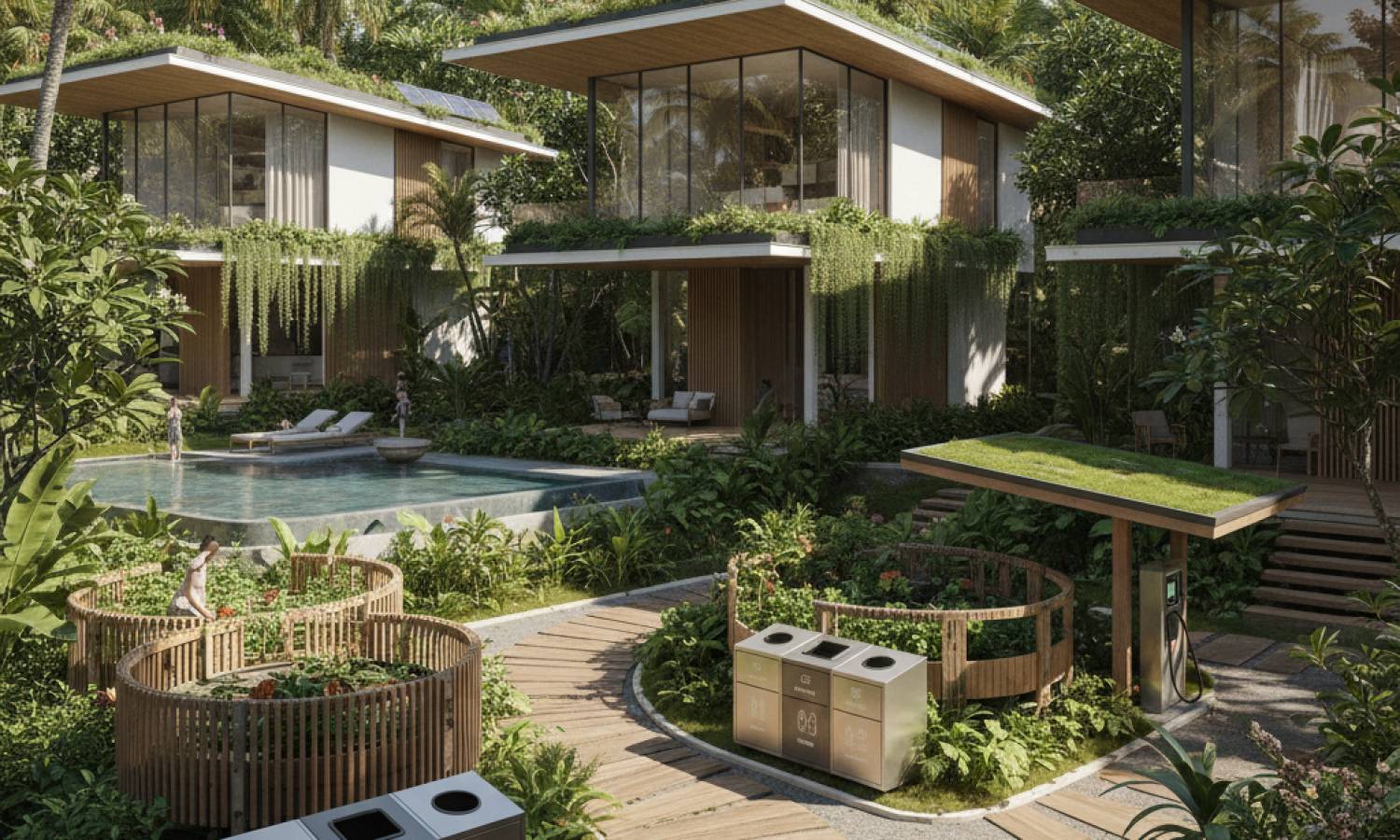
The people who live in Bali together with their business operations should practice improved waste management techniques by creating separate areas for organic (wet) and inorganic (dry) waste at their locations. The practice serves as an essential step because it protects recyclable materials from contamination which leads to better recycling outcomes and lower chances of landfill waste accumulation. The system reduces methane emissions which function as a powerful greenhouse gas that emerges from waste sites while following worldwide sustainability patterns that now affect real estate market value and foreign market interest in properties.
Multiple new solutions have appeared to solve Bali's waste management problems successfully. The local enterprise ecoBali which started operations in 2006 provides homes and businesses with basic waste separation and collection solutions. The waste management system provides customers with two bins which separate their trash into organic waste and inorganic waste including glass and plastic and metal and paper items and schedules regular collection services. The company operates three sorting facilities at Dalung and Tibubeneng and Kerobokan which achieve an 85-90% material recovery rate before sending recyclables to specific processing factories. Property owners who operate rental villas or serviced residences can enhance their environmental reputation and guest happiness by joining these sustainability programs.
The Urban Biologist's Urban Compost service provides organic waste composting to more than 80 villages throughout South Bali which spans from Uluwatu to Tabanan. The organization supplies buckets for weekly food scrap collection which their aerobic natural composting process transforms into premium compost products. The tropical environment of Bali makes nutritious compost essential for maintaining private gardens and villa landscaping and community green spaces which will increase property value for buyers who care about the environment.
The practice of disposing used cooking oil (UCO) has always presented challenges but Noovoleum from Indonesia now provides customers with two collection options which include scheduled pickups and digital public collection points called UCollect Boxes. The system rewards users through digital currency which motivates them to dispose of waste correctly. The collected oils get converted into Sustainable Aviation Fuel and renewable diesel which demonstrates a circular economy system that attracts global investors who prioritize ESG (Environmental, Social, Governance) criteria.
Shiva Industries operates its rapid composting technology for big-scale organic waste management from its Bali-based facility. Their bio-digestion machines operate as plug-and-play systems which handle 300 to 2,000 kilograms of organic waste per day and serve resorts and commercial buildings and environmentally focused real estate developers. The investment strategy brings two benefits to investors because it reduces waste disposal costs and it matches the growing demand for eco-tourism which draws high-paying visitors.
The service costs differ between these services because ecoBali charges IDR 500,000 monthly for household waste separation collection which equals USD 35 and Urban Compost prices its services based on volume with clear and easy-to-use rates. The model of Noovoleum operates through participant involvement and reward systems which decreases the chances of people discarding UCO improperly thus protecting plumbing systems and environmental health. Shiva Industries provides corporate clients with customized pricing that depends on their business size.
The real estate market shows two main areas of interest because Canggu and Uluwatu attract homebuyers who want environmentally friendly homes while their villa prices range from USD 250,000 to more than USD 1 million. The implementation of green waste solutions will create enduring value for properties while maintaining high resident satisfaction in these highly competitive real estate markets.
The project faces ongoing risks because it needs thorough investigation to verify that local staff follow all new waste and environmental rules and obtain necessary building and operational permits (IMB/PBG). The risks can be reduced through partnerships with experienced management teams and green service providers.
The shift toward sustainable waste management in Bali protects its natural environment while generating operational advantages and strengthening property assets which are essential elements for success in the current environmentally focused real estate sector.
Analytical Section: Practical Takeaways for Buyers & Investors:
- A USD 300k buyer in Canggu who wants to lease a villa should factor in the expenses for local waste management services such as ecoBali when calculating their total cost of living.
- The development of resort and mixed-use properties in Uluwatu requires developers and investors to work with Shiva Industries for rapid composting services which will help them save money and attract visitors who care about the environment.
- The community composting program at Urban Compost enables families who want to move to Sanur or Tabanan to practice environmentally friendly habits which makes their new neighborhood more attractive.
- The verification process for potential investors should confirm that property management maintains proper permits for environmental practices such as waste disposal to prevent future regulatory problems.
Final Takeaway:
The green waste revolution in Bali serves as a strategic business benefit which transforms property assessment and maintenance practices and enhances customer experiences. The solutions which investors and buyers should adopt at present will create a sustainable path to financial success in the future.