
Lunar New Year in Bali 2026: A Feast for Every Lifestyle and Budget

Bali lights up Lunar New Year 2026 with the Fire Horse season, filling villages and beaches with lively food festivals, music, and shared stories across every corner of the island. Whether long-term resident, remote worker, parent, or traveler staying in high-end resorts, each person finds moments that fit their own rhythm and curiosity. Old customs meet modern charm here, where warmth and beauty blend under bright skies and vibrant nights.
Festivities kick off on February 16 and 17, 2026, standing out across locations. Ahead of and following those days, various spots keep the spirit alive with themed activities. Across the island - from bustling Kuta & Legian to quieter areas like Seminyak, Nusa Dua, Jimbaran, Ubud, Uluwatu, Sanur, and Canggu - each region shapes its own way to honor the moment.
What makes this relevant to those buying or investing in properties? The Lunar New Year brings a surge in travel to Bali, drawing locals and global visitors alike who want to experience its traditions and shared culture. When festivals like this hit, places close to busy spots - villas, serviced homes - in neighborhoods such as Seminyak, Canggu, or Nusa Dua tend to get more interest for quick rentals, busier schedules.
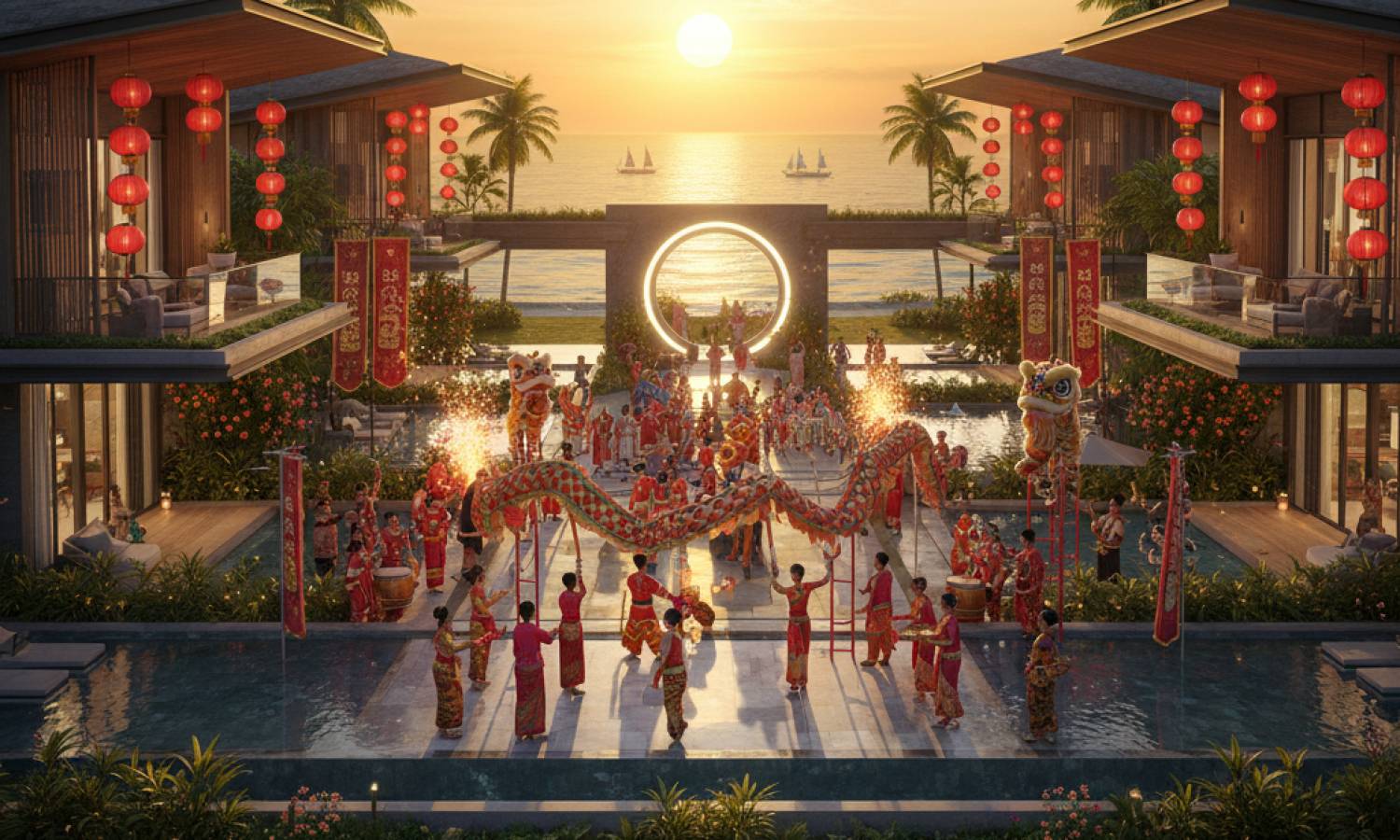
What happens around here shapes how you experience each event. Instead of just watching, you see things like Barongsai dance performances that come alive during big moments. Dishes appear - Yu Sheng with crunchy mix-ins, Nian Gao sitting quietly on counters waiting to be eaten. Rituals unfold, not loudly but steadily, filling spaces with meaning locals feel, yet travelers connect to too. Prosperity isn’t shouted; it’s carried in colors, sounds, even timing between meals and greetings.
A simple meal in Legian might cost just IDR 599,000 - roughly USD 40 - for someone sitting down at a casual resort eatery suitable for families. On the other end, high-end options in areas like Nusa Dua or Seminyak push prices toward IDR 1,688,000++ per pair, around USD 115++, especially during elaborate events with broad spreads and structured courses.
When festivals spark activity, those who invest see solid returns on rent income, plus rentals stay full - usually over 80 percent - especially in prime villa spots. People searching for homes where life feels alive tend to choose places close enough to cultural centers, so enjoying local spirit and top-tier restaurants isn’t a hassle.
Here's a closer look at key spots across the region.
Over in Kuta and Legian, places that suit families and moderate spending, you can find things like Padma Resort’s holiday food gathering for IDR 599,000+ (around USD 40+). That night offers a lineup of local acts alongside familiar dishes across Asia - not flashy, just full of flavor and tradition.
Experience unfolds in Seminyak, where spots like Hotel Indigo Bali’s Makase serve refined meals alongside vibrant energy. A performance unfolds here - the rhythmic motion of Barongsai, a traditional dance that fills the air. Instead of ordinary service, guests gather for an Oriental Feast, arranged across a stretch of buffet tables. Price stands at IDR 888,000++ (USD 60+), marking both a starting point and an opening act.
Out in Nusa Dua, high-end spots like The Ritz-Carlton and Renaissance stand out with fancy soires and polished tea times, costing between IDR 1,000,000++ to IDR 1,688,000++ (around USD 70 – 115++) per guest or pair. Families with means, along with romance-minded pairs, often pick such moments for quiet elegance.
Out in Ubud, things move at a calmer pace - places such as Padma Resort Ubud shape their food and activities around calm, thoughtful living, offering meals that balance health and taste starting at around IDR 588,000 plus (roughly USD 40) per guest.
Nowadays, Canggu draws more remote workers and young individuals who appreciate its laid-back coastline. Resort touches - think dining options at places such as Regent Bali or COMO Uma Canggu - add sophistication without overpowering the area’s calm atmosphere. Leisure blends naturally here with local life, drawing people seeking balance rather than speed.
When places feel alive, people often think about moving during those moments. Income from short-term rentals grows fast under these conditions - yet rules tied to leases matter just as much, possibly taking half to two thirds of what you earn. Fees linked to running rentals? They add up too.
Sure, holidays mean more people around, which helps fill places. Yet crowds also bring heavier traffic and louder nights - particularly where bars and beaches pack Seminyak and Canggu. Thinking ahead, those watching markets notice how living there shapes choices, not just profits.
Practical takeaways for buyers and investors
- One thing matters most when you’re spending 300 thousand dollars to rent out in Seminyak or Canggu - how numbers shift each year. During the Lunar New Year rush, earnings jump fast, yet expect half again more in actual costs once property handling kicks in. Fees? Sometimes hit between ten and twenty percent above what you first calculate.
- Peaceful spots like Ubud or Sanur could suit families wanting quiet surroundings. There, traditional events happen without overwhelming the soothing mood of the area.
- During peak seasons, big events at upscale hotels in Nusa Dada pull in high-spending crowds - one dinner seat might cost over IDR 1,000,000, roughly USD 70. These gatherings help explain demand for lavish rental units aimed at well-heeled travelers.
- When leasing, review the contract for holiday crowd limits and how rentals renew - knowing this can prevent last-minute issues when parties rise.
Festive lights flicker across Bali during 2026’s Lunar New Year season, mixing tradition with rising demand for vacation rentals. Buying now might mean stepping into a cozy retreat just as festivities reach their peak. Instead of waiting, moving ahead during these busy times could bring both profit and deeper connection to island life.